Pairpoint Lamps
The Legacy of Pairpoint Lamps: A Collector's Guide
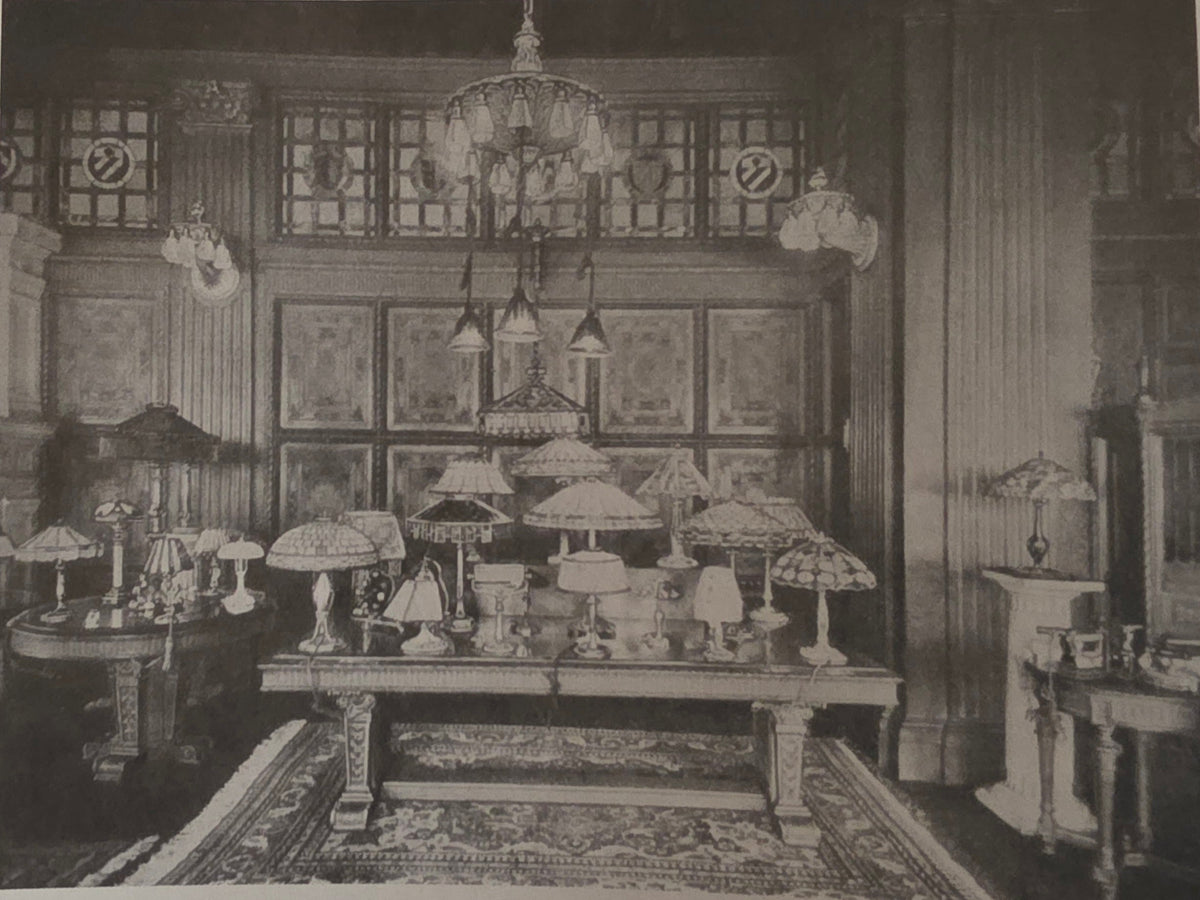
For collectors of antique lighting, few names evoke the same level of reverence and admiration as Pairpoint. Known for their breathtaking reverse-painted and blown-out "puffy" glass shades, Pairpoint lamps stand as glowing testaments to the golden age of American decorative arts. These luminous masterpieces, which graced the parlors of the affluent during the early twentieth century, continue to captivate collectors today with their intricate artistry and exceptional craftsmanship.
The Origins of a Glass and Silver Empire
The story of Pairpoint lamps is a tale of two distinct companies that merged to create an American decorative arts powerhouse. The roots of the enterprise stretch back to 1837, when Deming Jarves founded the Mount Washington Glass Works in South Boston, Massachusetts. Jarves, a prominent figure in the American glass industry who had previously established the New England Glass Company, laid the foundation for what would become one of the country's most innovative glasshouses. In 1870, the company relocated to New Bedford, Massachusetts, where it would eventually produce its most famous wares.
A decade later, in 1880, British silver designer Thomas J. Pairpoint resigned from his position as head designer at the Meriden Britannia Company in Connecticut. He moved to New Bedford and founded the Pairpoint Manufacturing Company, setting up shop right next door to the Mount Washington Glass Company. Initially, Pairpoint's firm focused on producing high-quality silver-plated metalware, serving as the primary supplier of ornate metal mounts and bases for Mount Washington's exquisite glass products.
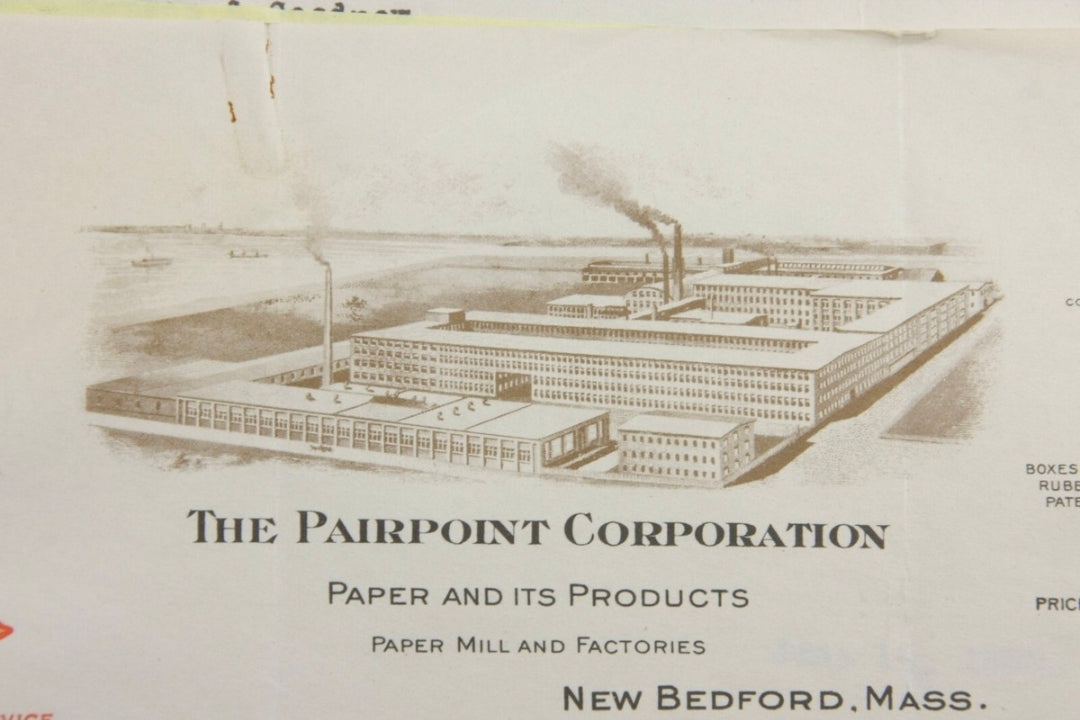
The proximity and complementary nature of the two businesses led to a natural partnership. In 1894, the Pairpoint Manufacturing Company officially merged with the Mount Washington Glass Company. By 1900, the consolidated enterprise was reorganized and renamed The Pairpoint Corporation, setting the stage for the creation of their legendary lamps.
The Golden Age of Pairpoint Lamps
The invention of the incandescent light bulb by Thomas Edison revolutionized domestic life and ignited a new era in decorative lighting. No longer constrained by the limitations of flickering candles or smoky oil wicks, designers could create lampshades that were entirely enclosed, allowing for unprecedented artistic expression. The Pairpoint Corporation quickly capitalized on this technological shift, receiving a patent for "electrolier" lamps in 1907.
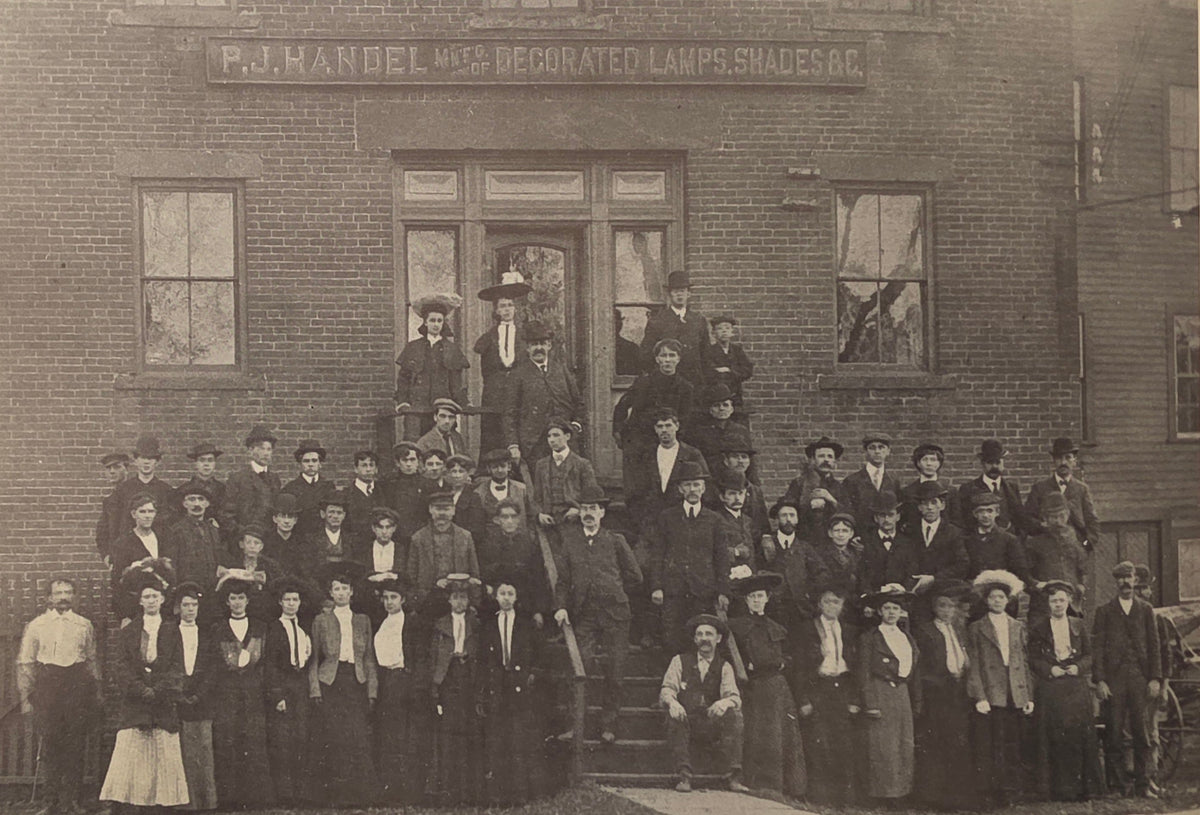
Pairpoint competed directly with other titans of the luxury lighting market, most notably Tiffany Studios and the Handel Company. While Tiffany was renowned for leaded stained glass and Handel for its reverse-painted shades, Pairpoint carved out its own unique niche by combining exceptional silver-plated and bronze bases with some of the most complex
and beautiful glass shades ever produced.
|
Shade Type
|
Characteristics
|
Notable Features
|
|
Reverse-Painted Landscape
|
Smooth exterior, painted on the inside surface
|
Soft, atmospheric glow; popular scenes include the "Garden of Allah"
|
|
Blown-Out ("Puffy")
|
Three-dimensional relief molded into the glass
|
Intricate floral, fruit, and wildlife motifs; frosted exterior
|
|
Ribbed Reverse-Painted
|
Vertical ribs molded into the glass profile
|
Often decorated with floral or landscape designs
|
The Artistry of the "Puffy" Lamp
While Pairpoint produced nearly one hundred different shade styles, they are perhaps best remembered for their spectacular blown-out shades, affectionately dubbed "puffies" by modern collectors. The origins of these remarkable shades date to 1907, when Albert Steffin, a key figure in the company's decorating department, patented a design for a glass shade featuring a floral bas-relief.
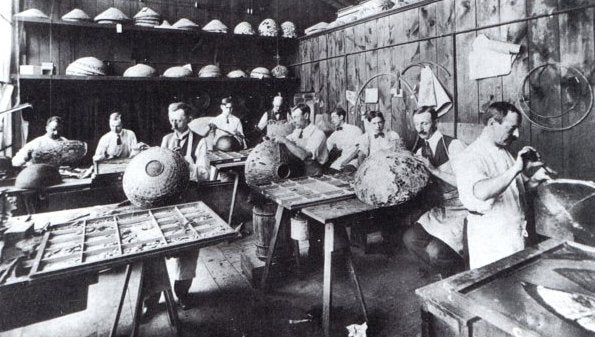
The creation of a puffy lamp was a labor-intensive process that required the collaboration of highly skilled artisans. The glass blanks were first mold-blown to create the intricate three-dimensional shapes of roses, tulips, hummingbirds, or owls. The exterior of the glass was then treated with acid to achieve a soft, frosted appearance.
Next, the shades were passed to the decorating department, where artists meticulously hand-painted the interior surfaces. By painting on the reverse side of the glass, the artists ensured that the colors would appear soft, luminous, and beautifully diffused when the lamp was illuminated. The painted shades were fired in a kiln to permanently fuse the pigments to the glass, ensuring the colors would never fade or flake. Finally, the exterior highlights were fire-polished to add refinement and depth to the molded details.
Because these lamps were hand-painted, no two are exactly alike. Customers could even place special orders, requesting specific background colors to match their interior decor. A shade with a hummingbird and roses motif might feature a soft pink background on one lamp and a deep burgundy on another, adding to the unique character of each piece.
Identifying and Valuing Pairpoint Lamps
For collectors, identifying an authentic Pairpoint lamp involves examining several key features. The company was remarkably consistent in marking its products, which aids greatly in authentication.
Virtually all authentic Pairpoint lamp bases are marked on the underside. The most common base mark is a capital letter "P" enclosed within a diamond, accompanied by the words "PAIRPOINT MFG CO." or "THE PAIRPOINT CORP." along with a model number. The bases themselves are typically crafted from high-quality silver plate or patinated bronze, often cast in the shape of gnarled tree trunks, classical columns, or ornate urns.
The shades are also frequently marked, though the signatures can be subtle. Authentic shades often bear a dark ink rubber stamp on the inside lower rim. These stamps may read "The Pairpoint Corp'n," "Patent Pending," or "Patented July 9, 1907." It is important to note that original paint on a Pairpoint shade was fired in a kiln, making it incredibly durable and impossible to scrape off with a fingernail—a key detail that helps distinguish originals from modern reproductions.
Today, Pairpoint lamps are highly coveted treasures in the antique market. While more common examples can command prices in the hundreds, rare and exceptional puffy lamps—such as the famous Owl lamp or the elaborate Rose Bouquet, can demand staggering prices, sometimes reaching well into the five or six figures.
A Lasting Brilliance
The Great Depression and changing consumer tastes eventually brought an end to the production of these extravagant lamps in the late 1930s. However, the legacy of The Pairpoint Corporation endures. The company underwent several reorganizations over the decades and eventually relocated to Sagamore, Massachusetts, where it operates today as the oldest glass company in the United States.
Pairpoint lamps remain as captivating today as they were over a century ago. They are more than mere sources of light; they are glowing canvases that capture the elegance, innovation, and artistic mastery of a bygone era. For those fortunate enough to own one, a Pairpoint lamp offers an eternally luminous bouquet that will never fade, bringing a touch of historic brilliance into the modern home.
Selling Your Pairpoint Lamp
If you own an authentic Pairpoint lamp and are considering selling, we invite you to contact us directly. We are always actively acquiring high-quality period lighting for our private collectors and would be happy to discuss the potential purchase of your piece.